Millennium Bridge, London

Posted by Alex Turnbull, Tuesday, 22nd May 2007

1 Star2 Stars3 Stars4 Stars5 Stars

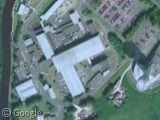
The first pedestrian crossing of London’s Thames river in over one hundred years, the Millennium Bridge was conceived as part of the high-profile Millennium Project. Opened on the 10th of June 2000, it was closed again just three days later when it became apparent that the large numbers of people crossing it were causing the whole structure to sway nauseatingly…

The initially small natural vibrations of the bridge encouraged the pedestrians to walk in sync with the movement – which only served to amplify the effect. These vibrations began to occur when there were comparatively few people on the bridge, so by the time there were around 2,000 people on it at once, the wobbling had become pretty dramatic [Youtube link].

Lateral movement of this type in bridges was well known (most famously having caused the complete collapse [Youtube link] of the Tacoma Narrows bridge) – yet this driven harmonic motion caused by the movement of pedestrians remained unanticipated throughout the pre-construction analysis of the bridge.

The Millennium Bridge was closed from June 2000 until February 2002, and even though the problem has now been resolved, it will forever be known simply as The Wobbly Bridge.

More about the London’s Millennium Bridge, as ever, at Wikipedia.

Thanks to Rory and Tim.

The Cutty Sark

Posted by James Turnbull, Monday, 21st May 2007

1 Star2 Stars3 Stars4 Stars5 Stars

The Cutty Sark was the last of the extreme clippers, built in 1869 to transport tea from China.

Probably the most famous ship in the world, the Cutty Sark was this morning severely damaged by a large fire, which police are treating as “suspicious”.

Luckily the masts, which can still be seen in the aerial photograph, had already been taken off the ship to be restored elsewhere so were not damaged in the blaze.

BBC News has the latest on the boat.

Thanks: Phil Britton & Dee

East Germany, in the Caribbean

Posted by Alex Turnbull, Thursday, 17th May 2007

1 Star2 Stars3 Stars4 Stars5 Stars

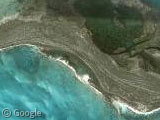
This is the small island formerly known as Cayo Blanco de Sur, Cuba. The island is around 15 km long, about 500 metres wide, and is uninhabited save for the indigenous birds and iguanas.

eastgermany.jpg

In 1972 while on a state visit to East Berlin, Fidel Castro gifted this island1 to the former socialist country of East Germany, and renamed it Cayo Ernesto Thaelmann, after the leader of the German Communist Party, Ernst Thälmann.2

Of course, East Germany ceased to exist in 1990 when the (East) German Democratic Republic was absorbed by the Federal Republic of (West) Germany. Well, that’s what everybody thought.

It transpires that Cayo Ernesto Thaelmann wasn’t actually mentioned in the unification treaty – West Germany never made a claim to it – meaning this Caribbean island is arguably the only remaining piece of East German territory.

You can read more about this bizarre story at the excellent Strange Maps blog.


  1. Well, Cuba apparently received 6% of the world market share in refined sugar in return. Which strikes me as pretty poor deal on East Germany’s part. 

  2. The East German ambassador erected a bust of Ernst Thälmann on the island’s south beach in August 1972, which survived until 1998 when it fell over during a hurricane. It might even still be there! Can anyone find it? 

Knots Landing

Posted by Alex Turnbull, Wednesday, 16th May 2007

1 Star2 Stars3 Stars4 Stars5 Stars

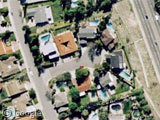
This will likely mean absolutely nothing to many of our younger readers but… look, it’s the cul-de-sac from Knots Landing!

knots-2.jpg knots-1.jpg

For any of you young enough to have never heard of this show; Knots Landing was a popular night time soap opera that began in 1979, and ran all the way until 1993. Weirdly though, in nearly 30 years the cul-de-sac doesn’t seem to have changed much at all!

See also our posts on Neighbours, Eldorado and Emmerdale and Coronation St & Eastenders.

Thanks to Mike.

The Solar Project

Posted by Alex Turnbull, Tuesday, 15th May 2007

1 Star2 Stars3 Stars4 Stars5 Stars

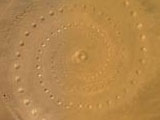
This is the incredible Solar Project in the Mojave desert, California. Originally conceived as Solar One, this was the first test of a large scale thermal solar power tower power plant, and you can clearly make out the tower’s shadow here.

It became Solar Two when a second ring of heliostats was added, making a total of 1926 heliostats with a total area of 82,750m². The idea is that the heliostats track the movement of the sun and focus the light onto the central tower, which stores the heat in molten salt.

Apparently Solar Two had the ability to produce 10 megawatts of power by redirecting the equivalent of 600 suns!

Solar Two was decommissioned in 1999, and was converted into an Air Cherenkov Telescope in 2001 (which measures gamma rays hitting the atmosphere), but there are currently plans underway to build Solar Tres in Spain.

Thanks to russ, Scott Ventura and Gesh.