John Frum Day

Posted by Alex Turnbull, Friday, 15th February 2008

1 Star2 Stars3 Stars4 Stars5 Stars

Today on the island of Tanna, Vanuatu, in the South Pacific, it’s John Frum Day.

Each year on the 15th of February, hundreds of people come to the tiny village of Lamakara from all over the island to celebrate their devotion to their deity, John Frum. These worshippers are described by anthropologists as members of a “cargo cult”, and the John Frum cargo cult is one of the last in existence.

johnfrumcargocult.jpg

Many cargo cults arose in villages in the South Pacific during World War II, after hundreds of thousands of American troops descended upon the islands from the skies and seas, bringing with them a seemingly endless bounty of supplies and material goods. Hardly any wonder then that when the troops eventually left the islands, the locals began to pray for the return of the cargo.

The name ‘John Frum’ is sometimes considered a corruption of “John from (America)”, and the cult believe that their saviour will eventually bring more cargo to this island, just as he did during WWII. Although it’s possible that John Frum existed before the 40s, he would most likely have been described as a white man until black American GIs arrived, whereupon the cult’s devotees very sensibly decided that in fact John Frum had been a black man all along.

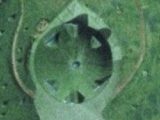
Today in Lamakara, John Frum’s followers will be dressing up as GIs, painting “U.S.A.” on their chests, raising the American flag, building symbolic landing strips, carrying bamboo bayonets, and marching to the top of their local volcano, Yasur1.

Confusingly, the central tenet of John Fruminism2 is actually the rejection of Westernism – devotees are instead encouraged to return to traditional “kastom” (a local word for native Tannese customs).

For more info see these articles on the cult at Smithsonian Magazine, damninteresting.com and the BBC, as well as the obligatory Wikipedia pages on Vanuatu, Tanna, Cargo Cults and John Frum.

Thanks to Brett Hanover.


  1. “The world’s most accessible volcano”. 

  2. Yes, I made that term up

Planes in formation

Posted by Rob, Thursday, 14th February 2008

1 Star2 Stars3 Stars4 Stars5 Stars

In the Saratoga Passage, Washington, there appear to be four planes flying in very close formation. Although it could just be an image overlay problem (there appears to be a seam between them) the four ‘motion ghosts’ are all in the same frame, making me believe it to be genuine.

formation.jpg

The small, square wingspan (about 22 feet with the ruler, assuming they are flying low) makes them likely to be aerobatic planes, but I can’t identify which model, sadly.

I’m hoping this isn’t a repeat of the last time planes in formation were featured on Google Sightseeing, as it turned out to be a case of photoshop shenanigans!

Thanks to kjfitz at virtualglobetrotting.com.

Street View Update Feb 08

Posted by Alex Turnbull, Thursday, 14th February 2008

1 Star2 Stars3 Stars4 Stars5 Stars

The Google Lat Long blog has announced that Google has just added 12 more US cities to their street view coverage, bringing their total coverage to, um.. lots. The new cities added are as follows:

And presumably just for today (because today is Valentine’s Day in case you’d forgotten), it seems the little Street View guy is standing on a little love heart.

Aww, puke.

Seal Island

Posted by Alex Turnbull, Wednesday, 13th February 2008

1 Star2 Stars3 Stars4 Stars5 Stars

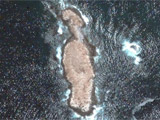
This small rocky outcrop off the coast of South Africa is Seal Island, which is named for the thousands of Cape Fur Seals that occupy it, and famous for the unique marine drama that unfolds here.

At various times of the year the island’s waters are home to a number of Great White Sharks that very much enjoy dining on the island’s seal population. In fact, the sharks regularly launch themselves vertically out of the water to attack the seals – a behaviour that may be unique to this one place. This is such a common occurrence that you can simply pay $210 US dollars to go and watch the sharks have the seals for breakfast. In mid-air.

This breathtaking behaviour featured in the BBC’s stunning Planet Earth tv series, as well as the Discovery Channel’s Air Jaws programmes. If you haven’t seen one of these shows, make sure you watch this truly incredible clip of the sharks in action on YouTube.

Thanks to Michael.

The Red Arrows

Posted by Rob, Tuesday, 12th February 2008

1 Star2 Stars3 Stars4 Stars5 Stars

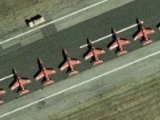
Founded in 1964, the Red Arrows is the common name for the Aerobatic Team of the Royal Air Force. The team consists of nine BAE Hawk aircraft, with a tenth always carried to events as a backup.

The ten craft are found neatly lined up on one of Blackpool airport’s runways. They now perform nearly every year at Blackpool, and are famed for their 9-plane diamond formation.

redarrows.jpg

All of the pilots are volunteers, and only serve a three year term of duty – as such there are always three new pilots each year. The pilots will all have seen frontline RAF duty, and have had 1500 flying hours.

According to Wikipedia:

The Red Arrows have no reserve pilots, as a spare pilot would not perform often enough to fly to the standard required. If one of the pilots is not able to fly, the team flies an eight-plane formation. However, if the Team Leader, ‘Red 1′, is unable to fly then the team does not display at all.

At the Red Arrow’s base, at RAF Scampton in Linconshire, another of the distinctive red planes is sitting on the tarmac by the hangars.

redarrows1.jpg

Meanwhile, a Folland Gnat, the aircraft the Red Arrows used before the Hawk, is on the grass and now acts as a gate guard for the base.

redarrows2.jpg

It is not unusual for British residents to see the Red Arrows fly past on their way to an event, as they generally travel at around 1000 feet to avoid the clouds or straying into flight paths.

More info on the Red Arrows can be found at their official site, and of course at Wikipedia. There is also a brilliant flickr photo pool of the team in action.

See our previous post, Planes Taking-off in Formation, for some possible sightings of other countries’ aerobatic display teams.

Thanks: JosieNorden, Ollie Miller and Rob H.