Karnak Temple Complex
Tuesday, 23rd June 2009 by Kevin Batdorf
After the Pyramids of Giza, Egypt's next most visited historical site is the Karnak temple complex just outside Luxor.
Karnak was constructed over a period of 1300 years by approximately 30 different pharaohs, and eventually grew to become a collection of 25 temples. Known in ancient times as Ipet-isut, 'The most select of places', it is the largest ancient religious site in the world.


At the south west of the complex is the Precinct of Mut, an enclosed area which is not open to tourists, as it's currently being restored. It contains the temples of Ramesses III, Khonspekhrod, and of course Mut herself, as well as a large crescent-shaped lake.

Leading north east from the Precinct of Mut is a 400m long avenue of ram-headed sphinxes, which leads directly to the Precinct of Amun-Re.

At 250,000 sq m, the Precinct of Amun-Re is by far the largest area at Karnak, and is the only area that is open to the general public. Amun-Re is dedicated to the Egyptian God Amun, who was the focus of the most complex theology in Ancient Egypt, and the huge scale of the complex here stands as testament to that.

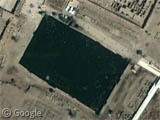
The Ninth Pylon, and The Sacred Lake of the Precinct of Amun-Re
The main attraction here however is actually the entrance to the Temple of Amun, The Great Hypostyle Hall. Fortunately for us, the roof no longer exists, which means we can see the famous 16 rows of 134 columns.
122 of the columns are 10 metres tall, and the remaining 12 are a gargantuan 21 metres tall, each with a diameter of over three meters! (Ground-level photo)
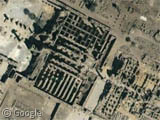
Inscriptions of the names of the Pharaohs, as well as reliefs depicting an expansive history, can also be found recorded on the walls of this ancient fossil of humankind's past.
For more information, be sure to check out the Karnak page at Wikipedia, which has links to a wealth of information about each of the sights we've seen today.

About the author

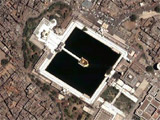

The thumbnail for the The Sacred Lake of the Precinct of Amun-Re links to the wrong location. It has the same link as large crescent-shaped lake. in the Precinct of Mut, a few pictures above. The Sacred Lake is about 0.5 km NNE of the crescent-shaped lake.
Thanks Pierce, now fixed.
Karnak the Magnificent?