Mulberry Harbour
Saturday, 18th March 2006 by
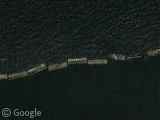
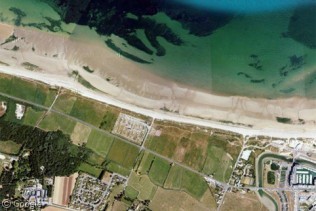
Mulberry Harbours were the artificial harbours constructed by the Allies for the D-Day landings at Normandy. The concrete structures in the sea are the remains of Mulberry Harbour B which was at Gold Beach near Arromanches in France. Mulberry A was located at the infamous Omaha Beach but was mostly destroyed in a storm. The Mulberry Harbours were made up of large hollow concrete blocks that were simply floated across the channel and then sunk into place. With these harbours in place the Allies could un-load armour and supplies much faster than with conventional landing craft. The disastrous Dieppe raid of 1942 had driven the Allied planners to come up with this non conventional tactic that proved essential for the success of the D-Day landings.
Thanks: David de Hor, Dan McD, Clayton Jenkins, Brian Lyles, Patrick, LodgeKeeper, John Regehr, Daniel Sparing, Paul, Tom Lithgow, M. Domoradzki & Gwaer

About the author

They have a great museum on this on the beach. They have a hugescale model of the thing plus various other memorabila. Really neat.
Yeah, I’ve been there. Y’know, there weren’t many American flags when I went in the summer of ’04. I thought the French were bitter but it turns out it’s just because the American didn’t land here as much. It was mainly the Brits and the remaining French.
If you go south-ish for a while you’ll reach the town of Bayeaux, and there’s a nice cathedral there.
To the south in the town of Bayeux you can see the Bayeux War Cemetery and Bayeux Memorial. View Placemark
The cemetry contains 4,654 of the graves of the British and Commonwealth soldiers who died in the first few days of the invasion of France.