Ship Breaking
Monday, 21st August 2006 by James Turnbull
Ship Breaking is primariliry carried out in developing nations such as India and Bangladesh - as their laws on dealing with lead paint, asbestos and general worker's conditions fall far short of Europe and the US.
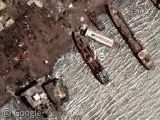
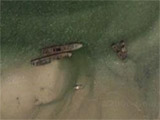
Chittagong Ship Breaking Yard in Bangladesh is mostly in low-res, but we can see a couple of ships here which have been beached on the mud flats for dismantling. All the steel from the ships is recycled and I think these are lifeboats.
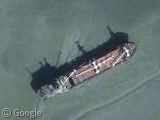
The workers here are mostly barefoot, have no safety gear and scrap the ships by hand. Greenpeace estimates that due to the potential for structural collapse on the ships, and the hazardous chemicals abound, one worker a day is likely to die. Edward Burtynsky's photos show just how perilous it is.
There's even more to see Alang, India, where workers can expect similarly awful conditions. Of note here's a huge end piece of ship and an aircraft carrier waiting out at sea.
Further reading on Wikipedia and Shoback
Thanks: Nathan, John Kranick, dr_cy_coe, Glenn, Ken Przywara, russ


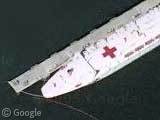
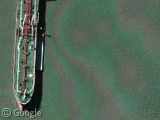
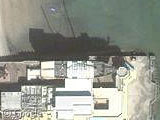
Wonder if the aircraft carrier waiting to be scrapped is the French carrier Clemenceau which was dragged down to India to be scrapped, then Greenpeace forced the French gov’t to pull it back to France?
The Wikipedia page on the Clemenceau (http://en.wikipedia.org/wiki/FS_Clemenceau_%28R_98%29) doesn’t give a good comparison shot, but the page of her sister ship, the Foch (http://en.wikipedia.org/wiki/FS_Foch), gives a shot from high above the wake. I would say that it is possible that this is the Clemenceau.
It is highly improbable that the picture shows the Clemenceau : this ship was hardly a few days nearby India, middle of last February, before being returned to a French navy harbour, Brest, for dismantling… The Foch is now owned by the Brazilian navy.
The film Workingman’s Death has a graphic section on shipbreaking in Pakistan. I tried to find that shipyard (in Pakistan) for GSS, but couldn’t track it down. Maybe somebody else can?
http://www.workingmansdeath.com/main_en.html#chapter4
Cheers, jp
I think the aircraft carrier might be Argentina’s Navy “ARA 25 de Mayo” (see http://www.histarmar.com.ar/Portaaviones/25deMayo.htm and http://www.histarmar.com.ar/Portaaviones/25deMayo.htm ). It was towed to India in the 90’s
The carrier is the Brazillian Minas Gerais (ex HMS Vengeance).
http://www.hms-vengeance.co.uk/farewell.htm
i watched a docco on Alang.. they dismantle ships with blowtorches, ropes, and their hands. piles of toxic materials are burning meters from the workers. they said Alang averages 1 worker death a day!
Nearby is this weird Alien thing going on. How cool is that?
https://www.googlesightseeing.com/maps?p=&c=&t=k&hl=en&ll=21.988258,72.34231&z=14
Now you know why all that cheap brass and other metallic crap you see at Pier One and other import shops comes from India. Same goes for all the fake armor and swords you geeks buy at the Renfests and on line. They break 85% of the worlds salvaged ships and the raw material feed their metallurgy industry. Why not just boycott the stores here. You forget that it was under Theodore Roosvelt that the first worker protection laws came into effect in this country and child labor was banned. All things in time. Are you prepared to spend more of your tax dollars in foreign aide to all the Indians and Pakistanis you put out of work? Oh yeah thats right, you probably don’t pay taxes, your parents do. Get a life and get a job.
I was at Alang two weeks ago, in the yards and on several ships. Every man there wears a hard hat, has a face mask and has shoes. I saw small crews hand picking debris from the beach. Safety signs were abundant, I saw an eyewash stand and numerous fire extinguishers.
However, it is an industrial site.
Maybe these changes occurred post Greenpeace. regardless, it is now not as Greenpeace previous protrayed.
Try 25 04′ 40″N 66 42′ 18″E
Dear Sir :
Our company in UAE -DUBIA we are looking to send as list for scrap ships ……
Regard ,
The carrier is the brazilian Minas Gerais
Edward Burtynsky’s photos (linked in the description) are strangely beautiful. I’m glad I came across this post.
In South Asia, ship-breaking takes place in India, Pakistan and Bangladesh. The workers in this industry are the most vulnerable workforce in the world with high rate of chemical and asbestos exposure. In India, Alang ship-breaking yard is located in Bhavnagar, Gujarat. It is located 288 km northwest of Mumbai. The number of accidents and casualties of workers at the yard has attracted global attention. With 16 % of workers officially exposed to asbestos and with the accident rate of 2 workers pr 1000, Alang is not safe but it safer than the ship-breaking activities in Gadani, Pakistan and Chittagong, Bangladesh
There is insincerity in safeguarding the occupational health and environmental security. The failure to ensure that all hazardous materials on board the ship are pre-cleaned in the country of export prior to delivery of the ship for dismantling is well known.
Especially post Clemenceau and SS Norway (Blue Lady), US and developed countries from Europe have been callous towards the adverse consequences for not only the environment but also for occupational safety and health of the workers because they do not ensure that the ships get pre-cleaned in the country of export. Thy pretend to be ignorant of the toxic affects to both the local surrounding, environment and society. The established local community relies on basic industries such as fishery and agriculture and is exposed to discharges and emissions to sea, ground and air. Indeed, lack of containment to prevent toxins from entering the food chain is a major concern.
These are a must-see: http://www.edwardburtynsky.com/
Oops, forgot to say, click on “Ships” in table of contents on the left.