Big Keys

Posted by James Turnbull, Friday, 29th August 2008

1 Star2 Stars3 Stars4 Stars5 Stars

On display outside a French High School, there’s what is claimed to be the world’s largest key.

The key measures around 10.5 metres long, although may have lost its title earlier this year when Bethlehem claimed the crown1.

It’s still impressive, especially in the fact that it’s completely useless.

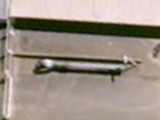
Not as large, but much more mysterious, is a 8.5m key lying around a carpark in Denver.

This key doesn’t appear on Live Search Maps2 or the Google Street View imagery, so it was either dropped by a careless giant, or isn’t a key at all. So what is it?

Thanks to Felippo & dda.


  1. Did you also notice the far too big keyhole behind the key? 

  2. Have Microsoft renamed their mapping service again? I thought it was called Live Maps last week… 

Tinsley Towers

Posted by Alex Turnbull, Thursday, 28th August 2008

1 Star2 Stars3 Stars4 Stars5 Stars

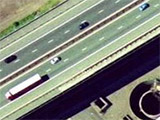
Tinsley Viaduct is a two-tier road bridge in Sheffield, England; the first of its kind in the UK. It carries the M1 motorway over a 1033 metre section of the Don Valley, and is one of Sheffield’s most prominent landmarks. Sadly there’s not much to see from our viewpoint.

Fortunately for us however, the Tinsley Viaduct runs right past the Tinsley Towers, a fantastic pair of defunct cooling towers. Due to their extremely close proximity to the viaduct, they were left standing when the power plant they served was demolished in the 70s.

As it happens, “extremely close” is a bit of an understatement - the nearest tower stands only 12 metres from the M1!

Actually, “stood” is the correct term I’m afraid.

Following years of strengthening work to the viaduct (and presumably advances in demolition technology), the towers were finally brought down1 in the early hours of Sunday the 24th August. You can watch a video of the spectacular destruction of the towers over at the BBC.

Thanks to Radio 2 and the ever informative Jonathan Rawle.


  1. Despite several campaigns to save them, including a rather fanciful attempt to reposition them as some kind of “art installation”. 

Oil Rocks

Posted by James Turnbull, Wednesday, 27th August 2008

1 Star2 Stars3 Stars4 Stars5 Stars

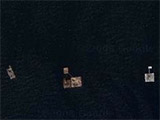
The Oil Rocks, 50km off the coast of Azerbaijan, is effectively a small city that has been constructed from interconnected oil platforms and residential areas, all sitting atop rocks, piles of sand and landfill.

Back in 1949, the Oil Rocks were the site of the world’s first successful offshore venture in oil drilling, and by the 1960s 21 million tons of oil was being extracted each year.

Of course, this level of extraction couldn’t continue forever, and the quality and quantity of the oil started falling in the 80s. With it, the upkeep of the platforms and interconnecting roads fell, and today about a third of the oil wells are either inoperative or inaccessible, and many of the connecting roads have become submerged.

Despite the conditions, the platforms still have a combined population of about 5,000 men, who work in week-long offshore shifts, and collectively they produce over half of the total crude oil output of Azerbaijan.

Several action sequences in the 1999 James Bond film The World Is Not Enough are set and filmed on the Oil Rocks, where terrorists used a giant helicopter saw to cut the oil pipes. Obviously.

There’s a thorough history at window2baku.com, Wikipedia has a couple of choice facts, and there’s a photo of the interconnecting bridges at travel-images.com.

Update: What we’re seeing here is actually not the Oil Rocks, but is very close. Oil Rocks is further out to sea, unfortunately in an low res area. You can get an idea of how big Oil Rocks really is from the OpenAerialMap image.

Thanks to Samir Aliyev and Panda32 in the comments.

Backchannel

Posted by Alex Turnbull, Tuesday, 26th August 2008

1 Star2 Stars3 Stars4 Stars5 Stars

Sorry folks, no post today.

However, many of you may be unaware that we operate a “backchannel” of sorts over at Twitter, where as well as a feed of all the posts from the main site, we also post some interesting stuff that doesn’t make it on here. So for the many people that don’t read our Twitter page, here the best links that you missed!

If you’d like more like this, subscribe to our twitter feed!

Hidden in Holland

Posted by Rob, Monday, 25th August 2008

1 Star2 Stars3 Stars4 Stars5 Stars

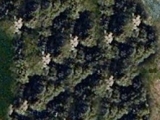
The town of Brummen in The Netherlands is perhaps the last place you would expect to find a secret government conspiracy in action, but any other explanation would be naïve: Google have obviously been forced to disguise the structure with the help of the clone tool, and the repeated use of a beige trees produces some rather amateur results:

However, when you look at it in the rival Live Maps service, you can see nothing amiss, apart from a half constructed golf course to the side - not the most secretive fortification in my eyes. When compared side by side, the woods seem to be wider and there is definitely a suspicious change in water colour:

In reality, the most plausible suggestion would appear to be an humble technician trying to clear up a mess left by an imagery artifact or cloud, but my gut knows that it is something to do with the renegade Staten-Generaal. The bloggers over at ‘Stinky Journalism‘ (seriously) have been to Google about this, and apparently they are investigating the anomaly.

We’re aware that there seems to be an anomaly in our imagery and are working to determine what happened.

Of course, this isn’t the first time Google has taken part in a bit of photoshop trickery, as we saw last year when they put on a sham aerial display.

Thanks: PhotoshopDisasters and StinkyJournalism.org