North Brother Island (Island Week 4)

Posted by Alex Steinberger, Monday, 28th September 2009

1 Star2 Stars3 Stars4 Stars5 Stars

It’s Island Week 4 here at GSS, which means we’ll mostly be posting about Islands. For about a week.

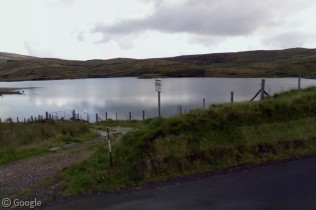
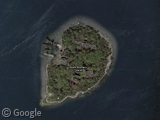
North Brother Island, home to many decaying and abandoned structures, sits just off shore of New York’s Manhattan borough in the East River. Now home to a few crumbling Gothic buildings, it once housed the Riverside Hospital, and is undoubtedly the creepiest island in New York City.

North Brother Island

Largely ignored until the late 19th century, North Brother Island did not see permanent settlement until the construction of the Riverside Hospital was completed in 1885. The hospital was built to house those suffering from infections diseases like cholera, typhoid, and smallpox as well as a constantly rotating staff of doctors and nurses.

In order to keep the island’s patients from infecting the rest of the city’s population, it was kept relatively isolated – a small ferry was the only mode of transport for hospital staff and supplies.

Brother Island Ferry

As the island’s population grew, additional dormitories and a tuberculosis pavilion were constructed. At its height during an 1892 typhus outbreak, North Brother Island held over 1,200 patients, many housed in makeshift tents.

Tuberculosis Pavilion dormitories

Perhaps the most infamous patient of the Riverside Hospital was Mary Mallon, known as Typhoid Mary. A cook at various Manhattan restaurants in the early 1900s, Mary also carried Typhoid. After infecting a total of 53 people she was committed to Riverside Hospital and lived out the rest of her life in an isolated cottage on the island.

Cottage

Riverside Hospital continued to treat victims of infectious disease and later, drug addiction, until it was permanently shut down in 1963 due to a staff corruption scandal. Over the past 40 years, North Brother has been left to decay into its current horror-movie-esque state and is now off limits to the public.

For more information and some great pictures, check out this blog.

Thanks to Edvado, yusaku and Katerina Korch.

Beijing South Railway Station

Posted by Alex Steinberger, Thursday, 6th August 2009

1 Star2 Stars3 Stars4 Stars5 Stars

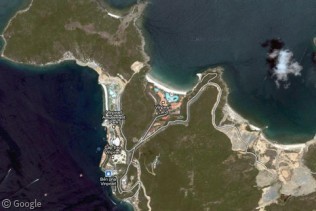
Here in Beijing amidst multitudes of concrete high-rise office buildings, stands the ultra-modern Beijing-South Railway Station. The building was only completed in August of 2008, but is now visible on Google Maps thanks to this month’s image update, which includes satellite imagery taken just over a month ago.

Beijing-South is the Chinese capital’s hub for high-speed rail travel, and is Asia’s largest train station.

BeijingSouth

Upon its completion, the Beijing-South became the third passenger rail terminal in central Beijing, focusing on long-range inter-city travel. It replaced the comparatively minuscule Yongdingmen Station, which until 2006 had operated continuously for over a century.

Yongdingmen

Resembling an airport more than a traditional passenger railway station, the new Beijing-South Station boasts 24 platforms with the ability to send 30,000 passengers per-hour1 zipping off to their destinations. The massive oval-shaped structure encompasses 320,000 square metres2 with a waiting area that can accommodate over 10,000 passengers.

WaitingArea

Designed to incorporate natural light as well as be environmentally-friendly, Beijing-South Station is a model of energy efficiency. Its central glass roof holds 3,246 solar panels that generate nearly all the building’s electricity!

gss1

The station was designed in a joint venture between Tianjin Design Institute and architect Terry Farrel, creator of such notable works as the Peak Tower in Hong Kong, and for you James Bond fans, the SIS building3 on the banks of the River Thames, London.

Requiring 60,000 tonnes of steel and 490,000 cubic metres of concrete to build, the Beijing South Railway Station took a workforce of 4,000 less than 3 years to construct. Looking at Google Earth historical imagery from August 2005 and April 2007 gives a great perspective to the massive scale of this project.

Aug05 Feb07

For some great pictures of the interior of the railway station, check out this blog.

Thanks to the Google LatLong Blog.


  1. That’s 241,920,000 every year! 

  2. That trumps Beijing National Stadium’s 258,000 square metres. 

  3. Otherwise known as Mi6. 

Mount Mayon (Volcano Week 4)

Posted by Alex Steinberger, Tuesday, 28th July 2009

1 Star2 Stars3 Stars4 Stars5 Stars

It’s Volcano Week 4 here at GSS. Volcanoes, about a week. You know the drill!

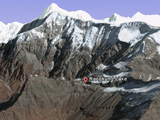
Rising up from the pastoral plains of Luzon Island in the Philippines is Mount Mayon, an active 2,400 metre-high stratovolcano. Known as the “perfect cone,” Mayon Volcano looks surreal in its symmetry, a true masterpiece of nature.

Mount Mayon Mount Mayon

The volcano rises up in stark contrast to the surrounding flat terrain, its upper slopes averaging a 35-40 degree grade. Eruptions occur primarily from a small volcanic crater but have also created pyroclastic flows that carved over 40 ravines around Mayon’s cone. Viewing Mt. Mayon in Google Earth shows its unique shape:

Mount Mayon

With 47 eruptions since 1616, it is the most active volcano in the Philippines and remains a danger to nearby villages even today. Its deadliest eruption took place in February of 1814 and killed over 1,300 people. During that Pompeii-style eruption, Mayon Volcano reportedly spewed plumes of hot ash while fast-moving lava flows completely covered the village of Cagsawa. The town’s bell tower was the only structure left standing after the eruption had ended.

Cagsawa

In recent decades, Mayon Volcano has continued to make its presence known in the region. With eruptions in 1984, 1993, 2006, and 2008, the residents of nearby towns and villages have become accustomed to frequent evacuation warnings and safety alerts. If you’re one of those adventurous1 types who likes a steep uphill climb, try Mount Mayon, but be sure to wear a helmet and watch for falling debris and hot magma.


  1. …or masochistic 

Picher, Oklahoma

Posted by Alex Steinberger, Friday, 10th July 2009

1 Star2 Stars3 Stars4 Stars5 Stars

Picher, Oklahoma is a small town in north-eastern Oklahoma near the Kansas-Missouri border. It was once a major hub for heavy metals extraction, boasting some of the most productive lead mines in the world. By the early 1970s however, all mining operations ceased leaving 480 kilometres of underground tunnels, more than 180 million tonnes of toxic waste, and a town without much of a future.

picher1

Located in close proximity to the Tar Creek Superfund Site, the citizens of Picher have been left to deal with toxic mine tailings left over from underground drilling operations. These tailing piles, known locally as “Chat“, litter the landscape, some towering one hundred metres or more above the town.

chat1 chat2

Aside from detracting from Picher’s overall scenic beauty, these chat piles contain extremely fine lead dust and pose a tremendous health risk to its citizens. Children are especially susceptible to the toxic dust because elevated levels of lead in their blood can lead to learning disabilities. Lead and zinc have even contaminated Picher’s drinking water as well as many swimming holes frequented by local youngsters.

tarcreek

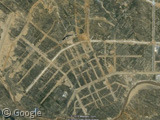
To make matters worse, the kilometres of abandoned mining tunnels below the town have been collapsing since the 1950s and continue to do so even today. Due to this geological instability, much of the town has been deemed unsafe for habitation leaving many former commercial and residential blocks in disrepair.

mainst

In 1983, Picher and its surrounding mines were declared one of the most polluted places in the United States and became a top clean-up priority of the Environmental Protection Agency (EPA). In the decades since, the EPA and the U.S. Government have made repeated attempts to relocate the residents of Picher. Though a small group of stalwart individuals have resisted relocation, the town is set to close on or around September 1 of this year. On June 13, a final farewell was held, allowing long-time residents to reflect on better times.

For more information about Picher’s history and final days take a look at this CNN article. Also worth checking out, “The Creek Runs Red” is a compelling documentary about the Tar Creek Superfund Site.

Thanks to Brian in Texas.

The Door to Hell

Posted by Alex Steinberger, Friday, 3rd July 2009

1 Star2 Stars3 Stars4 Stars5 Stars

The Darvaza (Darweze) natural gas crater is an endlessly smouldering geological anomaly located in the isolated Karakum Desert of Turkmenistan. Known locally as the “Door to Hell,” this close relative of the “Pool of Fire” and little-known tourist attraction has been on fire for at least three decades.

crater

Above, we see the natural gas crater (barely) as a glowing red spot in an otherwise unremarkable landscape. Given the low quality of the satellite imagery in this area, it is surprising that anyone knows that the “Door to Hell” even exists. This begs the rather existential question: if a crater is burning in the middle of nowhere, does anyone see it?

crater2 crater

As a matter of fact, a group of Russian geologists experienced it first hand in 19711 when the ground beneath their drilling equipment collapsed creating the abyss. Dispatched to the Karakum desert by the Soviet Union, they were searching for natural gas and found so much of the stuff that harvesting it became unsafe. With noxious gases threatening to harm nearby villages, the geologists set the seeping crater ablaze, unwittingly lighting the largest barbecue known to man.

The “Door to Hell” crater has been on fire ever since and shows no sign of stopping. Visible from a great distance, the glow from this eternal flame can even be seen in Google Earth’s City Lights layer.

City Lights City Lights Close Up

Wow, that’s bright! Visitors to Turkmenistan can venture out to see hell first hand, but there aren’t any organised tours so you have to hire your own driver2. Now who’s up for toasting the World’s Largest S’more?

Some really awesome photos of both craters can be found on this photography site and an impressive video of the “Door to Hell” is available on YouTube.

Thanks to Cris Diaz and Marc Buma


  1. Depending on the source, at least three separate years, 1958, 1971, and 1986, are listed for when the expedition took place. I chose to go with Wikipedia’s 1971 date, mostly because it was in between the other two. 

  2. If you do venture out you could visit another possibly related crater while you’re there.