Search Results for 'megaflyover'

Sand Tornado (Desert Week)

Posted by James Turnbull, Tuesday, 17th June 2008

1 Star2 Stars3 Stars4 Stars5 Stars

We’re continuing the first annual GSS Desert Week! In time-honoured tradition, we’ll mostly be posting about deserts. For about a week!

The Sahara is probably the world’s most famous desert, and covers much of northern Africa. However today we’re only looking at one tiny part of the desert, in the country of Niger.

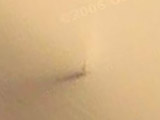
It’s not obvious at first, but if you look closely at the top of this sand dune you’ll see what we think is a dust devil (which is like a tornado made of sand).

Sandstorms are common in the Sahara and the walls of sand can reach up to 6,000 metres high. In fact, so much sand is blown up into the air that the Earth has an atmospheric layer made up entirely of Sahara sand!

This image comes to Google Earth as part of the National Geographic Megaflyover project. See all our previous posts for more of the fantastic high-resolution images.

Read more on Dust Devils and the Sahara on Wikipedia.

Thanks to Yvan.

Animal Tracks

Posted by Alex Turnbull, Friday, 25th April 2008

1 Star2 Stars3 Stars4 Stars5 Stars

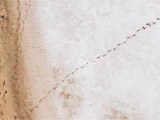
I wonder what kind of animal left these tracks on these salt flats in South Africa? Are there any animal trackers out there who can identify the creatures responsible?

Part of the National Geographic African Megaflyover Project, this particular image also features some slightly more identifiable tracks, but not left by an animal I suspect…

See our top-rated post of all time – Google Sightseeing Safari – for lots of animals that were still there when the photographs were taken!

Thanks to lepadekor.

Google Sightseeing 2007 Awards

Posted by James Turnbull, Monday, 31st December 2007

As 2007 draws to a close we present our choices for the best posts of the year.

Best Mystery

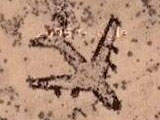
There were numerous contenders for the most confusing or bizarre images, but our pick is the Mystery Plane Outline, as even the generally accepted answer, that these are small rocks arranged in the shape of a plane, still begs the question: “But why bother?”.

Best personal project

In February we were impressed with one man’s attempt to single-handedly recreate a cruise ship in his front drive.

Lamest World Record

The Largest Wooden ship in the world from April easily wins this prize, due to having a less-than-exciting title and the fact that the specially built ship has never even been in the water!

worldslargestship.jpg

A special mention also goes to the German towns squabbling over who has the most unintentionally leaning building.

Our Brains Hurt Award

Getting our heads around the Island and Lake recursion from September’s Island Week 2 was almost too much, but I think we get it now…

Best Smallest Thing

We loved the idea of the world’s smallest parks from January, but the world’s smallest municipal park was just too darn small to see from satellite! Fortunately, Google now have a street view shot of it.

Best World’s Most Enlarged Thing

In the last year we’ve featured many, many sights that claim to be the “World’s largest something” but our pick for the Best Largest something is the World’s largest fingerprint.

Best Imagery

Undoubtedly the most amazing images to be found in Google Earth are the African Megaflyover project aerial shots, and the best of these images were highlighted in November’s Google Sightseeing Safari.

Best Blurry Pictures

Some of the aerial images in Google Earth are amazingly high resolution, but not high enough for our tour of miniature parks across the globe, which ended up as a list of blurry blobs that sort-of look like the Eiffel tower.

Best Landart

The ancient Incan geoglyph of a cat is fantastic, and much more intersting and attractive than kfc’s logo stunt.

atacamagiant.jpg

Most Ignored Warning

A few days after we posted this year’s April fools joke: “Live Satellite Images in Google Earth” we updated the entry with a banner warning users that it was a prank and there are no live images to be seen. Did anyone read that? Of course not! We still get a new message almost every week from someone who fell for the joke and wants to know where the live images are.

Most In-Depth Post

For a long time it had no decent imagery, so during Island Week this year we really went to town on our Easter Island post, and managed to condense 2,000 years of history into a mere 600 words.

Best Large Type

The rooftop message “Welcome to Cleveland” isn’t very interesting at first glance, until you realise that the message is over 400 miles away in Milwaukee!

So that’s our picks of the year, but with over 250 entries in 2007, what were your favourites?

Wishing you all a happy and prosperous 2008 – see you all next year!

Google Sightseeing Safari

Posted by Alex Turnbull, Friday, 9th November 2007

1 Star2 Stars3 Stars4 Stars5 Stars

There have been many creatures found on Google Earth, but the most impressive ones are mostly there as part of the National Geographic African Megaflyover Project, which brought us thousands of super-high-resolution aerial photographs of Africa. So to highlight the best, today we’re going on Google Sightseeing Safari!

Let’s start with the basics: many of the animals we can see in Africa are of course working animals, like this large flock of sheep, these forlorn looking donkeys, and an absolute plethora of cows, goats, camels, and people filling up at a well.

We can do much better than this though – out in the wild, things start to get a lot more exciting.

Firstly we can see a small group of Gazelles caught mid-leap in the desert of Chad, and there’s obviously been a few passing this way – look how many hoof-prints they’ve left in the sand! Also caught leaping (but through a river), are a large group of Red Lechewe in Zambia.

Again in Chad, but out on the savannah this time, we find this wonderful image of a small family of Elephants huddling together to protect their young. Presumably from the terrifying machine flying overhead…

Out on the plain in Mozambique we can see a portion of what must have been a fairly enormous herd of Buffalo, again presumably fleeing from the plane above them.

Thanks to the exceptional resolution of these images, the animals don’t have to be as big as the 1.7 metre high African Buffalo to be spotted. In a swamp in Mali, there’s a great image of a Giant Stork flapping lazily around. Just to the south there’s actually one perched in a mangrove, and lots of other birds have been caught on the wing elsewhere in Mali.

Not all the birds found are own their own though – on the coast of Mozambique there’s a stunning image of a huge flock of Pink Flamingos taking off (perhaps they were startled by this small boat to the north?).

To Zambia now, where we can see some lovely chubby little baby hippos and even better, in Tanzania we can see a pod of hundreds of hippos wallowing in the mud, which is a truly incredible sight.

Here’s another shot of the same hippos in the mud1, but this time we can more clearly see that’s there’s actually a dead hippo lying on the bank, being feasted on by vultures.

Hippos tend to share their pools and rivers with other creatures – particularly crocodiles, and nearby to yet another pod of hippos we can see the unmistakable silhouette of a crocodile just under the water. Next to the first hippos we found, there’s another crocodile, just chilling out on the bank.

Finally, although not being the kind of animals you’d traditionally expect to see while on safari, these images of seals on the coast of Namibia are too good not to include!

And here ends the great Google Sightseeing Safari. Of course this is only the beginning as there are more than 500 Megaflyover images to explore in Google Earth! Reggie98 at the Keyhole foums has been categorizing all of the animals to be found in them.

To see all the Megaflyover images, open “Gallery” in the Layers sub-panel (bottom-left) and enable the National Geographic Layer. You’ll see little red aircraft symbols appearing all over Africa, and each of these will take you to a hi-res shot of the area. Also, here’s a link to download a kml file which details many of the hundreds of undocumented images that form part of this enormous and stunning collection.

Thanks to all of the people at the Keyhole forums who helped me find these fascinating images! For more background on the project, visit the official Megaflyover and National Geographic pages.


  1. It would seem that this same image has been rotated and placed in a different area by mistake. 

National Geographic African Megaflyover Project

Posted by James Turnbull, Thursday, 8th March 2007

1 Star2 Stars3 Stars4 Stars5 Stars

News has spread across the internet over the last day or two of a “hack” that allows you much more zooming on Google Maps.

Unfortunately for all the people who’ve wasted hours scanning the earth, this is really nothing new. There are no methods for seeing higher resolution images of your favourite area than you can see today in Google Maps and Google Earth.

The confusion has developed from the recent Australia flyover and the far-from recent Africa flyover project. The result of both projects was images of a much higher resolution than elsewhere in the world – meaning there’s an extra zoom level or two in these areas and these areas only1.

A lot of folk have been suggesting that we feature these “new” sights, and even though we’ve highlighted a few before I thought I’d have another look…

The 500 different Megaflyover photographs included in Google Maps and Earth were selected by Mike Fay from his library of almost 92,000 images, taken from a small plane flying at low altitude.

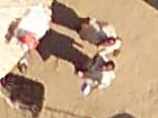
A couple of my favourite images are these guys in a small village, looking up at the aircraft as it passes over…

I also liked this pack of camels, roaming the desert.

But there’s hundreds more. So please, take my advice: Stop trying to hack URLs, load up Google Earth and switch on the “National Geographic Magazine Layer” under Featured Content. You’ll find it much more rewarding.


Previous Megaflyover shots on Google Sightseeing: Victoria Falls, The Longest Conveyor Belt in the World and N’dama Skull and Australia Day shots: Australia Day (check the comments too), NRMA Motorfest ‘07 & Nessie.

Wikipedia Links: Mike Fay and his MegaFlyover


  1. It wouldn’t make sense to add these extra zoom levels to the other 99.9% of the globe, there would be a whole lot more confusion!